

Intertwined: Black and LGBTQ+ Liberation

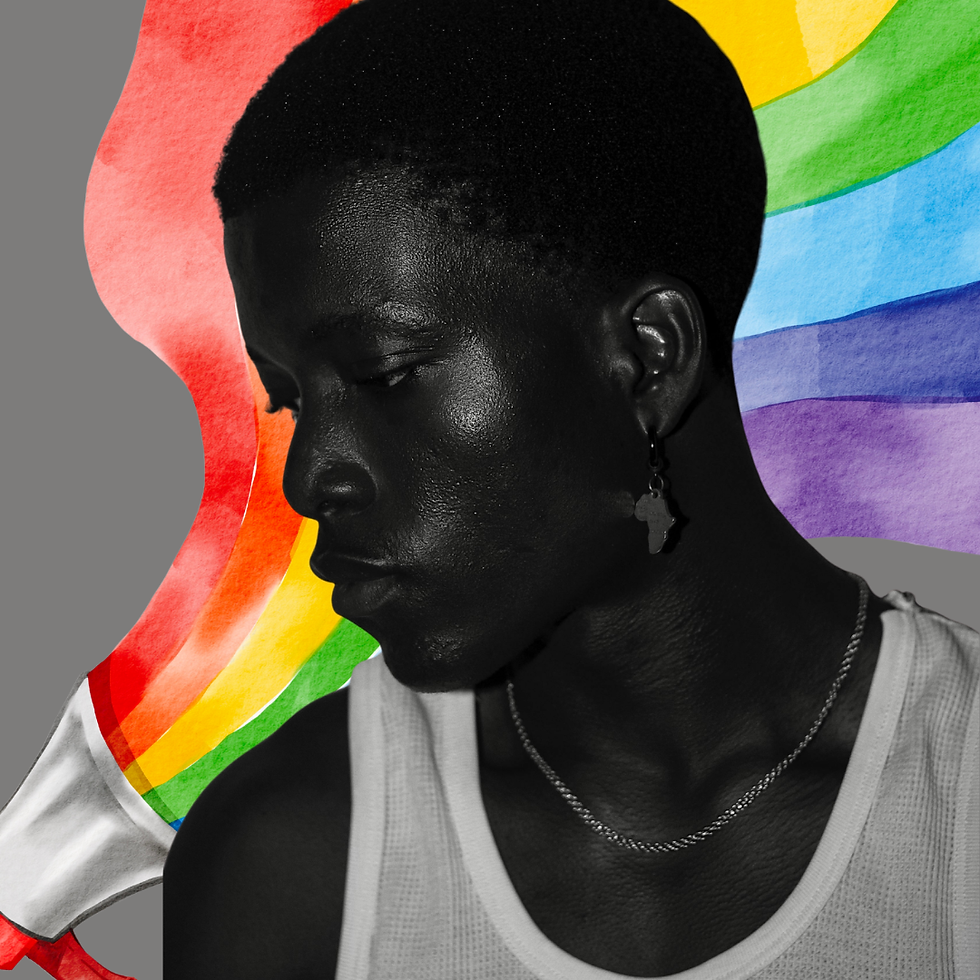
When people look at the history of the LGBTQ+ rights movement in the United States, one of the most enduring myths is that Stonewall (1969) created the movement out of thin air. The truth — supported by decades of research and archival evidence — is that LGBTQ+ activism did not emerge in a vacuum. It drew directly from the strategies, culture, and organizational models of the Black Freedom Movement and the broader struggles for racial justice. Even before Stonewall, leaders inside early LGBTQ+ activism were reading, borrowing tactics, and learning from movements fighting systemic oppression.
1. Shared Struggles, Shared Strategies
The Civil Rights Movement and the Black Power movement of the 1950s–1970s reshaped how Americans thought about protest, dignity, and rights. Nonviolent direct action, picketing, street demonstrations, sit-ins, and grassroots organizing became proven tactics for social change. LGBTQ+ activists in the 1960s and 1970s took note.
Historian Eric Cervini — author of The Deviant’s War — explains that leaders like Frank Kameny, a pioneering gay rights organizer, modeled many early LGBTQ+ activist techniques on those used by Black civil rights activists. In practice, this meant visible picketing, street demonstrations, and rallies instead of purely private or academic advocacy.
Frank Kameny’s Mattachine Society picketed the White House in 1965 — one of the first organized LGBTQ+ protests — emulating the public civil disobedience tactics that Black activists had used to demand voting rights and desegregation.
2. Bayard Rustin: A Bridge Between Movements
Bayard Rustin (1912–1987) is one of the clearest examples of how the Black Freedom Movement and LGBTQ+ advocacy were intertwined. Rustin was an openly gay civil rights strategist who organized the 1963 March on Washington for Jobs and Freedom — the iconic event where Dr. Martin Luther King Jr. delivered his “I Have a Dream” speech.
Although his sexuality led to marginalization within parts of the civil rights establishment, Rustin continued to promote nonviolent direct action tactics and worked on legal and cultural equality across movements. Later in life, he was an advocate in the struggle for gay rights, even testifying in favor of gay rights legislation.
Rustin’s life exemplifies how the fight for racial justice and the fight for sexual orientation and gender identity justice were not separate threads, but interwoven efforts toward equal citizenship. By organizing thousands of people to protest injustice, he set a template for coalition-building, mass mobilization, and participatory activism that LGBTQ+ organizers would adapt.
3. Influences of Black Power Culture and Identity Politics
The Black Power movement — with its emphasis on pride, self-determination, and cultural affirmation — influenced diverse liberation movements in the 1960s and 1970s. Its message of resisting systemic oppression and asserting dignity in the face of discrimination resonated with early LGBTQ+ activists, who were confronting police harassment, institutional exclusion, and social stigma.
Some LGBTQ+ activists adopted similar language about self-worth and visibility — most famously in the phrase “Gay is Good,” coined by early activists who were consciously riffing on the popular Black Power slogan “Black is Beautiful.” These cultural borrowings helped LGBTQ+ people assert that their identities were not something to be hidden or ashamed of but worthy of pride and public recognition.
This period also saw a growing intersectional awareness — that multiple forms of oppression are connected — a concept articulated by Black women feminists and adopted by queer activists as they built alliances and broadened their frameworks of justice.
4. Black LGBTQ+ Activists at the Center of Early Movements
Black LGBTQ+ individuals were not merely inspirations; they were central actors in developing the LGBTQ+ rights movement.
Ernestine Eckstein, a Black lesbian activist in the 1960s, brought the organizing experience of the civil rights movement to lesbian and gay groups and helped normalize public protest tactics within those spaces. Her understanding of demonstrations as essential political tools came directly from her civil rights experiences.
Stormé DeLarverie, a Black butch lesbian and entertainer, is remembered by many eyewitnesses as one of the people whose confrontation with police helped spark the Stonewall Uprising — a moment widely seen as a catalyst for LGBTQ+ liberation activism around the world.
Black queer leaders also organized early national groups and conferences that addressed both racial and sexual discrimination. Organizations like the National Coalition of Black Lesbians and Gays were among the first to articulate a political voice for LGBTQ+ people of color in a movement that was otherwise dominated by white narratives in its early decades.
These activists helped expand the movement’s reach and bring intersectional perspectives — recognizing that race, sexuality, gender, and class are shaped together in systems of power and resistance.
5. Why These Connections Matter Today
Understanding the historical intersections between Black liberation and LGBTQ+ liberation is not merely an academic exercise — it’s a reminder that movements for justice are collective and interconnected. Black organizing provided tools, language, cultural frameworks, and models of resistance that LGBTQ+ activists adapted and transformed.
This history challenges us to reject simplistic origin stories and center the contributions of people who worked at the crossroads of multiple identities and struggles. It also highlights the importance of intersectionality — a concept that emerged from Black feminist thought and has since become foundational to modern social justice movements.
Sources
Historical Research & Organizations
Eric Cervini on early LGBTQ+ activism drawing from Black Freedom Movement tactics.
Library of Congress history of Frank Kameny’s protests modeled after civil rights demonstrations.
National Museum of African American History and Culture on Black LGBTQ+ community organization.
Recognition of Black lesbians and gay organizers and their influence.
GLAAD reporting on Black queer contributors to culture and activism.
Ernestine Eckstein’s influence on lesbian and civil rights activism.
Accounts of Stormé DeLarverie’s role in Stonewall protests.
Civil Rights Figures Bridging Movements
Bayard Rustin’s role as civil rights strategist and gay rights advocate (Stanford King Institute, History.com, Freedom House).


Comments